
Kitchen Knife Care and Sharpening Basics
Share
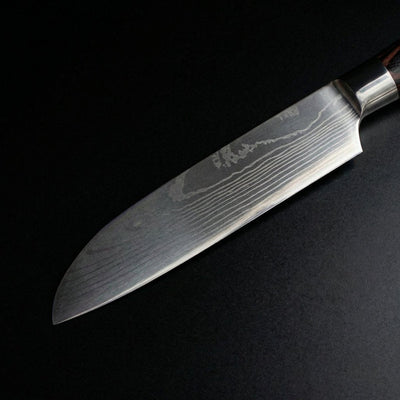
Looking after a kitchen knife is mostly a matter of habit. Washing it by hand, cutting on a forgiving surface and storing it with a little thought all help maintain the edge between sharpenings.
Washing and drying
Wash knives by hand in warm water with a little washing-up liquid, then dry them straight away with a tea towel, wiping from the spine towards the edge with the blade facing away from your hand. Leaving a blade wet in the sink or on the draining board gives moisture time to sit on the metal, and a dishwasher adds heat, strong detergent and a cycle spent pressed against other items in the basket. Hand washing is the calmer route.
Choosing a cutting surface
Cut on wood or plastic. Both give way slightly under the edge, which is what a board is for. Stone, glass and ceramic surfaces do not give at all, so drawing an edge across them tends to blunt or chip it. The same goes for cutting directly on a plate or on the kitchen counter.
Honing and sharpening are different jobs
A honing rod realigns an edge that has folded slightly out of true through everyday use. It removes little to no metal and can be done briefly and often. Sharpening, by contrast, removes a small amount of metal to form a fresh edge, and is done once honing no longer brings the edge back.
Whetstone basics
A whetstone session follows a few steady steps:
- Prepare the stone. Some stones are soaked in water before use, while others are splashed as you work; follow the guidance that came with yours.
- Work from coarse to fine. Begin on a coarser grit when the edge is dull, then move to a finer grit to refine it.
- Hold a fixed angle. Keep the same angle on every stroke, on both sides of the blade. A steady hand matters more than the precise number of degrees.
- Raise a burr. Work one side until a fine ridge of metal, the burr, can be felt along the opposite side of the edge, then repeat on the other side.
- Polish the burr away. Finish with light, alternating strokes on a fine grit, so the burr is removed rather than folded over.
Storing knives
Storage matters as much to the edge as use does. Three common options:
- A knife block keeps each blade in its own slot; slide knives in and out resting on the spine rather than the edge.
- A magnetic strip holds blades flat against the wall; bring the spine to the strip first and roll the blade on, so the edge never lands against the magnet.
- A blade guard covers the edge for drawer storage or travel, so the knife is not lying loose among other utensils.
Loose storage in a drawer is the one habit worth dropping. An edge that knocks against other metal needs sharpening sooner, and a covered or separated blade is not lying loose when you reach in.
None of this asks for much time. Wash and dry after use, hone now and then, sharpen when the rod can do no more, and put the knife away with its edge in mind.