
Choosing and Maintaining a Cutting Board
Share
A cutting board sits under almost every meal you prepare. The material it is made from shapes how it feels to cut on, how it is cleaned and how much routine care it asks for. Here is a factual look at the three surfaces you are most likely to come across: wood, plastic and titanium.
Wood, plastic and titanium compared
Wood
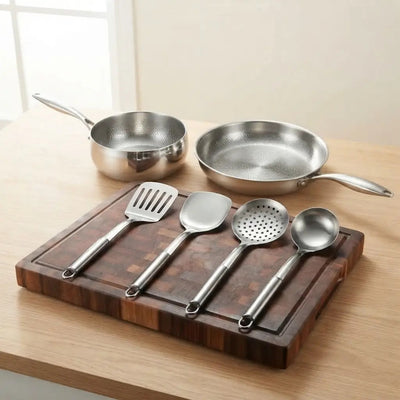
Wooden boards are usually the thickest and heaviest of the three. Wood is porous, so it can take on moisture and odours if it is left wet or allowed to soak. In return, wood yields more under a blade than metal does, which many cooks appreciate, and shallow cuts can often be sanded out later. Of the three materials, wood asks for the most routine attention: hand washing, thorough drying and periodic oiling.
Plastic
Plastic boards ask for the least routine care. Many are marked as dishwasher-suitable, though it is worth checking the maker's guidance, and they need no oiling. Over time, knives leave visible score marks in the surface. A deeply scored plastic board cannot be sanded back the way wood can, so it is usually replaced rather than refinished.
Titanium
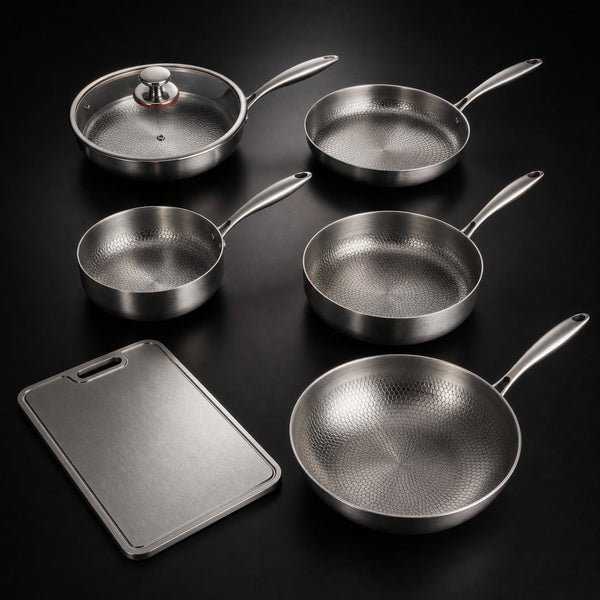
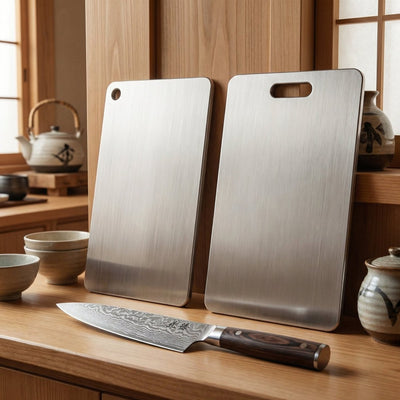
Titanium cutting surfaces are a newer arrival in home kitchens. As a metal, titanium is non-porous: it does not absorb moisture or odours, and it needs no oiling. Care is largely a matter of washing and drying. The trade-off is hardness. Metal is a firmer cutting surface than wood or plastic, so some cooks hone their knives a little more often when using one, or reserve it for tasks such as slicing fruit or portioning cooked food.
Cleaning and drying
Whatever the material, the routine after use is much the same:
- Wash the board soon after use with warm water and a little washing-up liquid.
- Rinse well and dry with a towel rather than leaving the board to drip.
- Stand a wooden board upright or on a rack so air reaches both faces.
- Keep wooden boards out of the dishwasher and do not leave them to soak; prolonged exposure to water can lead to warping and cracking.
Oiling a wooden board
It is common to oil a wooden board from time to time. Once a month is a widely used rhythm, or whenever the surface starts to look pale and dry. Choose an oil sold as food grade, such as mineral oil intended for kitchen use. Ordinary cooking oils from the cupboard are usually avoided, as they can turn rancid on the board.
Apply a thin layer with a cloth, leave it to absorb for a few hours or overnight, then wipe away anything the wood has not taken up. How often a board wants oiling is a matter of habit and circumstance rather than a fixed rule; it depends on how often the board is washed and how dry the air in your kitchen is.
Plastic and titanium boards skip the oiling step altogether. For them, care comes down to prompt washing and proper drying, with an occasional check of the surface. For a wooden board, it is the same routine plus a little oil now and then.