
Caring for a Titanium Pan
Share
A titanium pan asks for very little in the way of upkeep. Even so, a handful of small habits make everyday cooking easier and keep the pan looking well cared for. The guide below covers the four things that matter most: cleaning, heat, utensils and storage.
Everyday cleaning
Handwashing suits a titanium pan better than a cycle in the dishwasher. Once the pan has cooled after cooking, give it a wash at the sink.
- Use warm water and a small amount of mild washing-up liquid.
- Clean with a non-scratch sponge or a cloth, and leave abrasive scourers and steel wool in the drawer.
- For stuck-on food, fill the pan with warm water and let it stand for ten to fifteen minutes, then wash as usual.
- Dry the pan straight after washing. Air drying tends to leave water marks, so a quick wipe with a tea towel is worth the few seconds it takes.
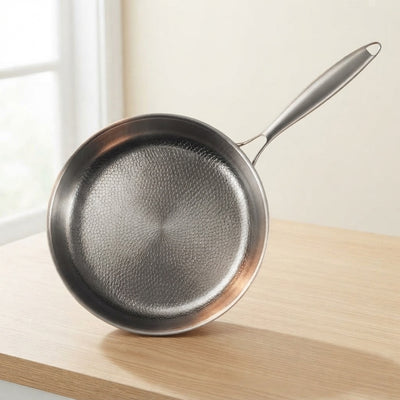
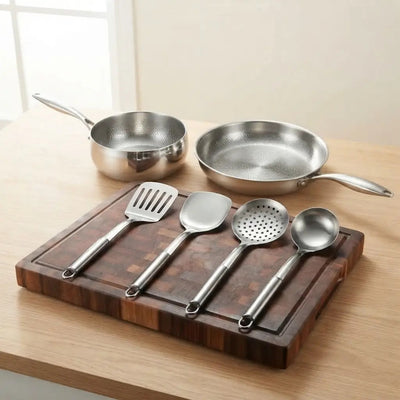
If your pan has a hammered texture, work the sponge in small circles so it follows the surface. There is no need to scrub hard; a short soak loosens most residue before the sponge does its work.
Building heat gradually
Heat is where good habits count the most. Set the hob to medium, give the pan a short while to warm through, then add your oil or butter. Working up from a medium setting gives you more control than starting high and adjusting down.
Two things are worth avoiding. The first is leaving an empty pan over high heat, which can discolour many metals. The second is running cold water into a pan that is still hot; let it cool on the hob or a trivet first, then wash it.
Choosing utensils
Wooden and silicone utensils are a gentle match for the cooking surface, and they are quiet in the pan as well. Metal spoons and turners can be used with a light touch, though over time they may leave fine marks, as they can on most cookware. If you would rather keep the surface unmarked, reach for wood or silicone first.
Storing the pan
Make sure the pan is fully dry before it goes back into the cupboard. A damp pan in a closed space is never a good idea.
- Hang the pan from a rail or hook if you have one, so air can move around it.
- If pans are stacked, place a cloth or a felt protector between them so the surfaces do not rub against each other.
- Store lids separately, or rest them slightly ajar, so no moisture is trapped inside the pan.
None of this adds more than a minute or two to the end of a meal. Wash by hand, dry straight away, build heat with a little patience and give the pan a dry place to rest. Looked after in this way, a titanium pan settles into the rhythm of a kitchen and quietly earns its place there.